
Home / Guides / Dust, heat and the west sun
GUIDE · THE WEAR STORY
Dust, heat and the west sun
Singleton sits in genuinely semi-arid country: around 700mm of rain in a good year and summer days that push 30 degrees, the driest and hottest patch in the Hunter Valley. People here already know what that does to machinery. This is what it does to the machine on the front of your garage.
DIAGRAM · WHERE THE VALLEY GETS IN
The torsion spring
Dust between the coils acts like an abrasive, and the daily cold-dawn-to-hot-afternoon swing works the steel harder. Springs here tend to finish their rated cycles at the early end of the range.
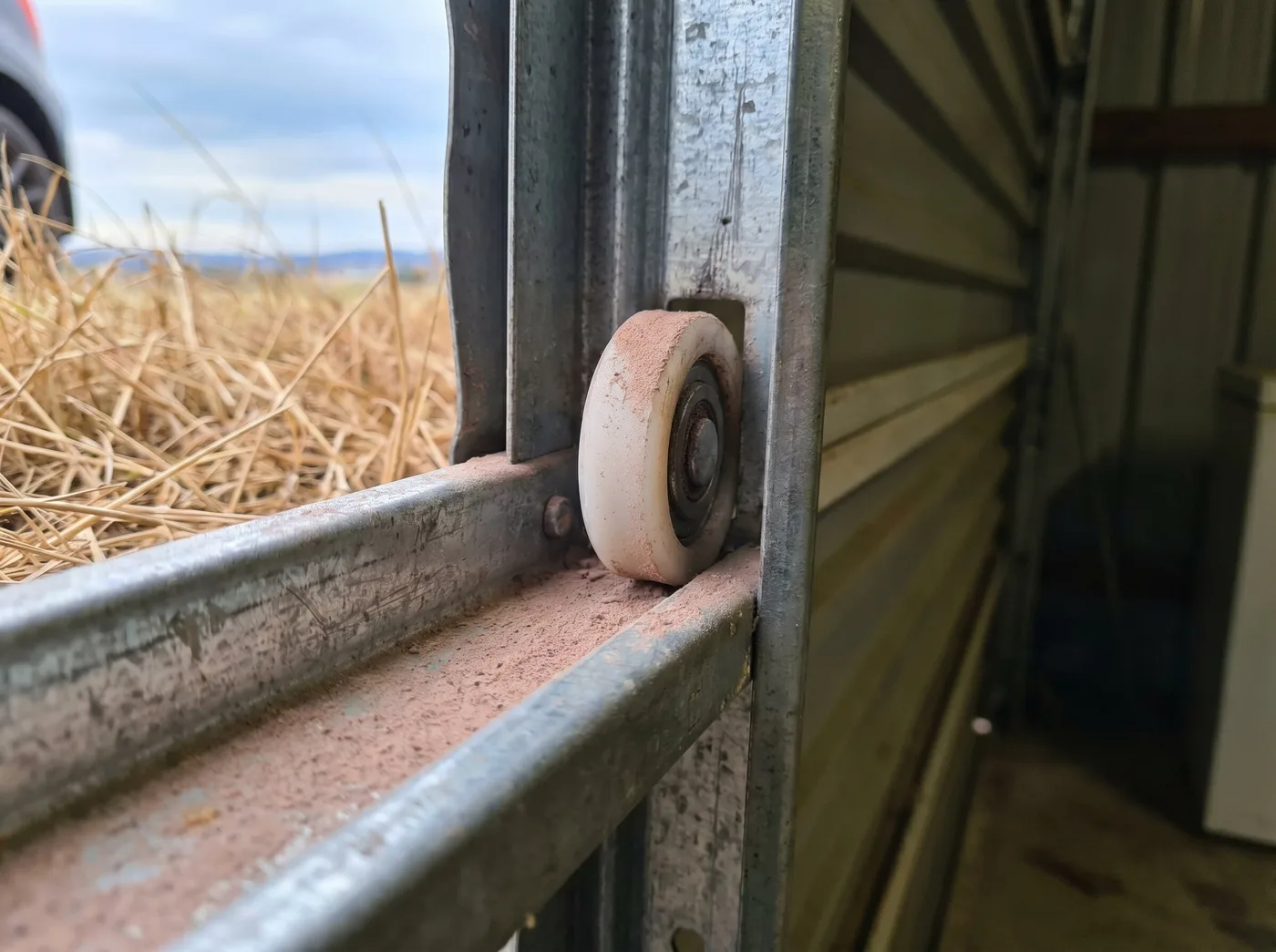
Tracks and rollers
Fine valley dust settles on the tracks and rail, mixes with old grease, and turns into grinding paste. Rollers wear flat, the door runs loud, and every cycle costs more than it should.
The door face
A west-facing steel door takes the full afternoon sun on 30-degree days. Panels expand and contract daily, paint chalks, and the door can move slightly out of true, which the opener then fights.
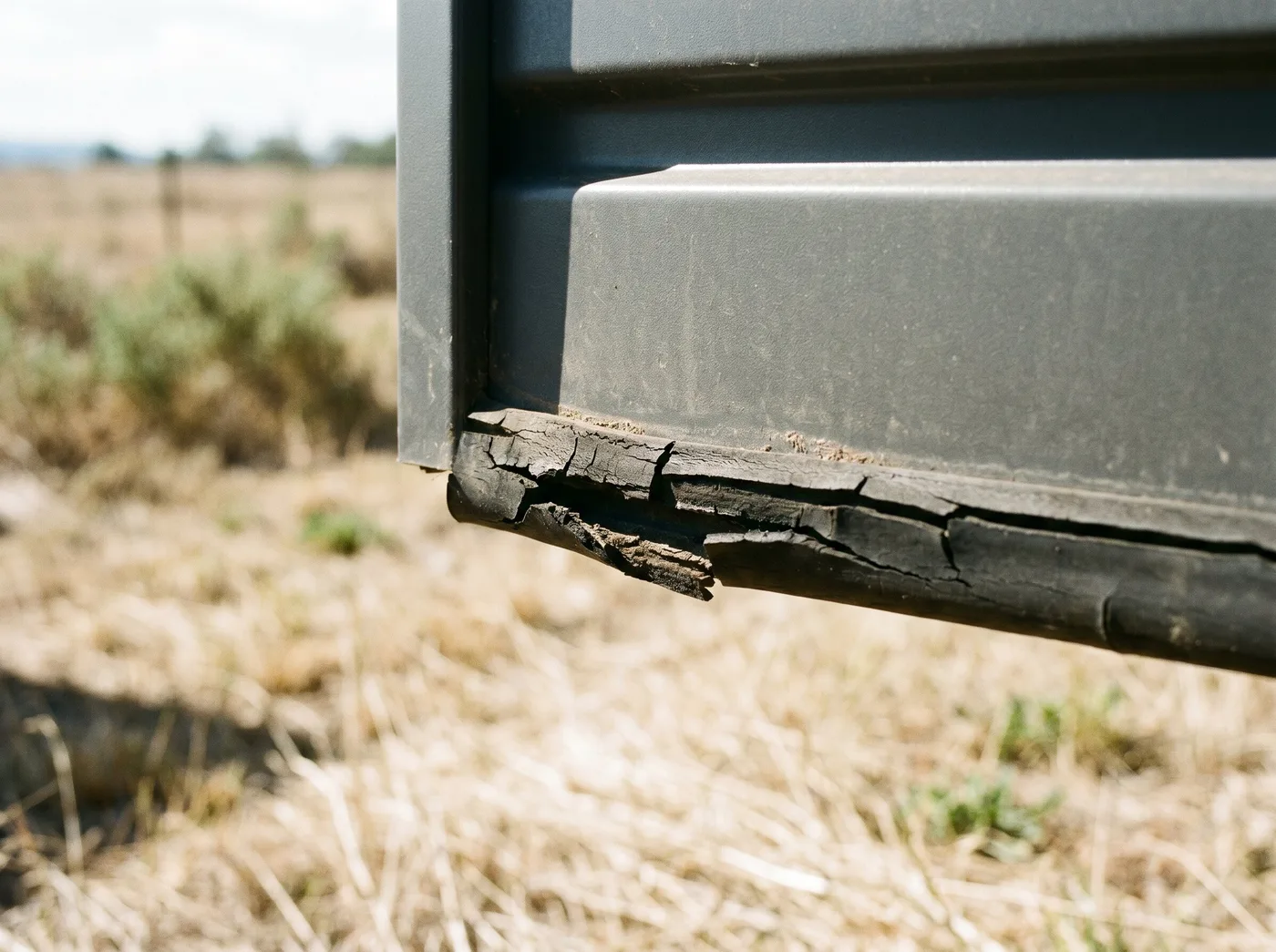
The bottom seal
Rubber hates heat cycling. Seals harden, crack and curl, and once they do, dust, water and vermin have an open lane under the door. On bush-fringe blocks that gap matters for embers too.
The opener
The opener pays for everything above it: dragging a dusty track, lifting an unbalanced door, straining on hot afternoons. "The motor died" is usually the last chapter of this story, not the first.
What to actually do about it
None of this is a reason to panic; it's a reason to service. The whole point of the pre-start culture this town runs on is that gear in hard conditions gets checked on a schedule instead of run to failure. For a garage door in this climate, that looks like:
- A yearly walk-around: springs, cables, rollers, tracks, seals and opener settings checked and lubricated, with the dust cleaned off first so the lubricant helps instead of hurts. That's our Pre-Start Service.
- Seals replaced when they harden, not when the water or the dust storm arrives.
- The balance test once a season yourself: opener disengaged, door lifted by hand. One hand, stays put at half height. Heavy or drifting means book it in.
- If the door faces west, think about insulated panels at replacement time; the garage and the opener both run cooler.
Not sure where your door sits? Walk around it with our Pre-Start Check: five minutes, tick what you see and hear, get a straight read on what it likely means.
References
- Bureau of Meteorology climate data. The long-term rainfall and temperature records behind the "driest, hottest corner of the Hunter" line; look up Singleton's stations and see for yourself.
- NSW Rural Fire Service. The authority on bushfire-prone land and preparing property on the bush fringe; a sound door seal is a small part of a much bigger picture that starts there.